Executive Summary & Global Market Snapshot
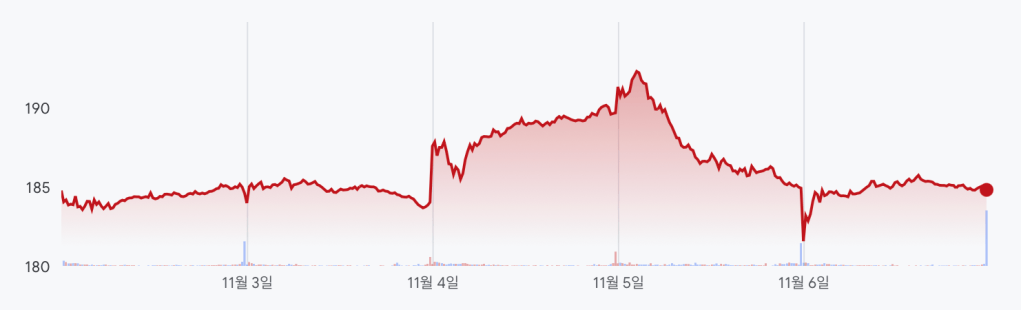
Global financial markets experienced a seismic repricing this week as investors digested the results of the November 2026 U.S. Midterm Elections alongside central bank policy decisions. Because shifts in the balance of Congress directly dictate the trajectory of U.S. fiscal spending, corporate taxation, and international trade tariffs, the election outcome triggered immediate cross-asset volatility across North America, Europe, and Asia. While U.S. equities rallied on reduced legislative uncertainty—a classic post-midterm historical pattern—global currency markets, sovereign bond yields, and trade-dependent indices from the Eurozone to South Korea adjusted sharply to the shifting fiscal and regulatory landscape.
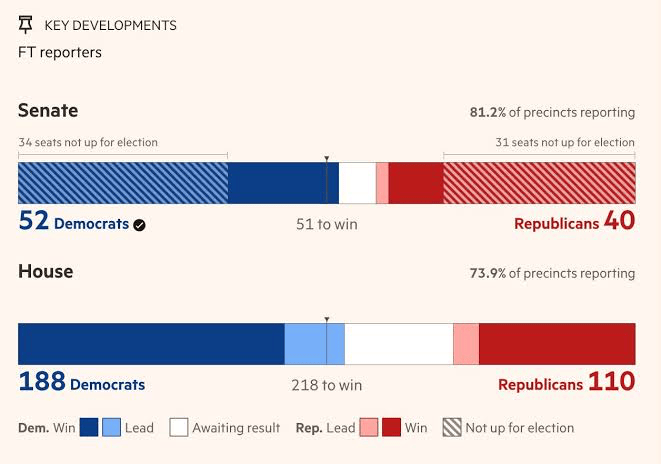
The Macroeconomics of the Midterms: Fiscal Gridlock, Bond Yields & Trade
From a macroeconomic standpoint, midterm elections act as a referendum on fiscal impulse and regulatory direction, transmitting shocks across three primary global channels:
- Legislative Gridlock & The Bond Market: Historically, divided government or narrow congressional majorities limit the passage of massive, unfunded fiscal stimulus packages. Fixed-income markets welcomed the prospect of restrained federal borrowing, easing upward pressure on long-duration 10-year and 30-year U.S. Treasury yields after weeks of debt-supply anxiety.
- Global Trade & Tariff Realignment: With legislative authority over taxes and spending divided, executive branch trade policy and targeted industrial tariffs remain the primary geopolitical lever. Export-heavy economies—including Germany’s industrial base (DAX), Japan’s Nikkei 225, and South Korea’s KOSPI—saw immediate sector rotation as institutional desks priced in supply-chain localization requirements and cross-border tariff risks.
- FX & The Dollar Smile: Volatility in the U.S. Dollar Index (DXY) rippled through emerging and developed foreign exchange markets. While cooling Treasury yields offered brief relief to the Euro (EUR), Japanese Yen (JPY), and Korean Won (KRW), safe-haven dollar demand persisted amid global trade policy uncertainty.
Sector Spotlight: Deregulation Beneficiaries vs. Trade-Sensitive Industrials
The post-election landscape created sharp bifurcation across global equity sectors:
- Financials & Traditional Energy: U.S. regional banks, capital markets, and domestic energy producers outperformed on expectations of a more predictable regulatory ceiling and preserved corporate tax structures.
- Healthcare & Pharmaceuticals: With major sweeping drug-pricing legislation unlikely to pass through a tightly divided Congress, global pharmaceutical and biotech valuations experienced a relief rally.
- Global Clean Tech & Multinationals: Conversely, multinational manufacturers, European automakers, and green-energy supply chains faced valuation headwinds amid scrutiny over subsidy continuity and cross-border tariff exposure.
Reader’s Guide: Strategic Analytical Tips & Market Cautions
For student researchers, economic observers, and long-term market participants navigating post-election volatility, several core principles apply:
- Tip 1 — Separate Political Noise from Monetary Fundamentals: Elections drive short-term sentiment, but corporate earnings growth and central bank liquidity (Federal Reserve, ECB, and Bank of Korea rate paths) drive long-term asset prices. Focus on how fiscal policy interacts with inflation rather than reacting to daily political headlines.
- Tip 2 — Watch the “Post-Midterm Seasonality” Effect: Historical equity data dating back to 1950 shows that the 12 months following a U.S. midterm election have consistently delivered above-average S&P 500 returns, largely because markets despise uncertainty and reward legislative clarity regardless of the winning party.
- Caution 1 — Beware the Debt Ceiling & Fiscal Brinkmanship: A divided Congress increases the probability of political standoffs over the U.S. federal debt ceiling and government funding bills in 2027. These episodes can trigger sudden, sharp spikes in short-term Treasury bill yields and temporary equity market drawdowns.
- Caution 2 — Currency & Unhedged International Exposure: For global investors (such as Korean or European participants holding U.S. assets), currency fluctuations between the USD and local currencies can amplify or erase underlying stock gains. Always evaluate total return on a currency-adjusted basis.
Disclaimer: This research note is prepared by TEENS CENSUS for academic, student-led, and extracurricular research purposes only and does not constitute financial, investment, or legal advice.


답글 남기기